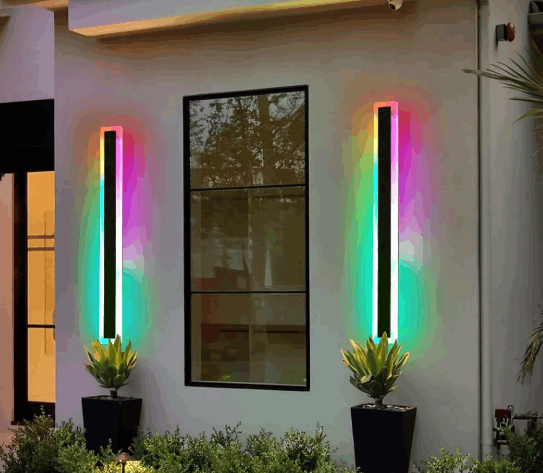
Ener-J Smart Home: Making Everyday Home Automation More Accessible
Smart home technology has developed considerably from the early days of remotely controlled lighting and basic programmable timers. Connected devices can now help householders manage lighting, heating, electrical appliances, security and other everyday functions from smartphones, voice assistants and automated routines.
Ener-J Smart Home products form part of this growing connected-home market, providing options for introducing intelligent controls into different areas of a property. Rather than requiring every aspect of a home to be automated at once, smart devices can often be introduced gradually, allowing householders to concentrate initially on the functions that provide the greatest practical benefit.
Lighting is one of the most straightforward places to begin. Conventional lights rely primarily on someone physically operating a wall switch. Smart lighting adds the possibility of remote operation, scheduling and automation.
This can be useful in several ways. Lights can be scheduled around normal routines, controlled without moving between rooms or incorporated into automated scenes that operate several devices together.
A household might create an evening routine that changes selected lighting at a particular time, for example, or configure external lighting to operate according to a schedule.
Remote control can also provide reassurance when someone is away from home. Rather than leaving the same light continuously switched on for several days, compatible connected lighting can potentially follow a more realistic schedule.
Smart switches provide another approach to lighting automation. Instead of changing individual bulbs, the control can be incorporated into the switching arrangement itself.
The most appropriate solution depends on the existing electrical installation and how the household wants the lighting to behave.
Building a Connected Home
One advantage of smart-home technology is that automation can extend beyond lighting.
Smart plugs provide a relatively simple way of adding control to compatible conventional appliances. The plug sits between the electrical socket and appliance, allowing the power supply to be controlled through the connected system.
This can be useful for lamps and other suitable electrical equipment, particularly where scheduled or remote switching would be convenient.
However, smart plugs should always be used within their specified electrical ratings and only with appliances appropriate for this form of switching.
Heating controls can potentially provide more significant benefits because heating represents a substantial proportion of household energy use.
Smart thermostats and related controls can make heating schedules easier to manage and potentially provide more precise control over when different systems operate.
The practical benefit is not simply being able to adjust heating from a phone. Good automation should reduce the number of manual actions required.
A useful heating schedule, for example, can automatically reflect when occupants normally wake, leave the property and return home.
Connected controls can then provide the flexibility to make changes when those routines differ.
Sensors expand these possibilities further. Motion or occupancy detection can be used as a trigger for other smart-home functions.
A hallway light could operate when movement is detected rather than remaining switched on continuously. Other automations might depend on door sensors, environmental conditions or particular times of day.
When selecting Ener-J Smart Home equipment, it is therefore useful to think in terms of complete routines rather than individual gadgets.
Buying a smart device simply because it can be controlled through an application does not necessarily make a home meaningfully smarter.
The strongest applications usually solve a specific problem.
Perhaps outdoor lights are regularly left switched on. Maybe heating schedules are difficult to manage, or a household wants certain lights to operate automatically when people arrive home.
Starting with the problem makes it easier to identify which connected technology is genuinely useful.
Connectivity, Automation and Practical Considerations
Smart devices depend on communication, making connectivity an important part of the installation.
Different products can use Wi-Fi or other wireless communication technologies depending on their design. Some devices communicate directly with the home network, while certain smart-home ecosystems can use hubs or gateways to coordinate compatible equipment.
Before purchasing multiple devices, it is worth understanding how they communicate and which applications or platforms are required.
Compatibility becomes increasingly important as the system expands.
A home containing several unrelated smart products can potentially require numerous separate applications. Although each individual product may work perfectly well, everyday control can become fragmented.
Where possible, considering the wider ecosystem before purchasing can create a more coherent setup.
Voice control provides another way to interact with compatible smart-home equipment. Instead of opening an application, users may be able to operate supported devices through an appropriate voice assistant.
This can be convenient for simple actions such as changing lighting without reaching for a phone.
Automation, however, can often provide greater value than either smartphone or voice control.
If a light should always operate at a particular time or in response to a particular event, an automated routine can remove the need to issue a command at all.
This represents an important distinction between remote control and genuine home automation.
A remotely controlled lamp still requires someone to decide to switch it on. An automated lighting system can make that decision according to predetermined conditions.
Timers are among the simplest forms of automation, but sensors can create more responsive behaviour.
Motion, light levels and other environmental inputs can potentially determine when compatible devices operate.
Careful configuration matters because excessive automation can become irritating.
A motion-activated light that repeatedly switches off while someone remains relatively still in a room may be less convenient than an ordinary switch. Similarly, overly complicated routines can become difficult for other household members to understand.
Manual control should therefore remain straightforward wherever possible.
Internet connectivity also deserves consideration. Some smart features may depend on cloud services or external connectivity, while others may retain certain local functions if the internet connection is unavailable.
Householders should understand how important devices behave during a network outage.
Cybersecurity is another part of connected-home ownership.
Smart devices communicate over networks and should therefore be treated as connected computing equipment rather than purely conventional electrical accessories.
Using strong account passwords, installing available firmware updates and maintaining appropriate router security can help reduce unnecessary risks.
Where multi-factor authentication is available for associated accounts, enabling it can provide additional protection.
The home Wi-Fi network itself needs adequate coverage.
A smart device positioned at the far end of a property, inside an outbuilding or outside the house may have a weaker wireless connection than equipment located close to the router.
Poor connectivity can result in slow responses or devices appearing intermittently unavailable.
Checking network coverage before installing numerous connected devices can avoid frustration later.
Electrical installation requirements also vary.
Plug-in products may require little more than initial configuration, whereas permanently wired switches, lighting controls and other mains electrical equipment need appropriate installation.
Electrical work should be completed in accordance with applicable requirements, with professional installation used where necessary.
Energy monitoring can be another useful feature of some connected devices. Where available, it can provide greater visibility into electricity consumption.
Understanding when and how energy is being used can help householders identify appliances or routines contributing significantly to consumption.
Smart technology itself does not automatically reduce energy bills. Savings occur only when control changes how equipment is used.
Automatically switching unnecessary lighting off or managing heating more effectively can potentially reduce consumption, while simply replacing a conventional switch with a connected equivalent may have little impact.
Smart-home planning should consequently focus on outcomes rather than the number of connected devices installed.
Reliability is equally important.
A conventional wall switch is extremely simple to operate. Smart technology needs to provide enough additional functionality to justify any extra complexity introduced by applications, wireless networks and configuration.
For frequently used functions such as lighting, retaining intuitive physical controls can make the system easier for visitors and other household members.
Scalability provides one of the attractions of connected-home technology.
A household can begin with a few useful devices and add more later as requirements become clearer. This allows users to learn which automations genuinely improve everyday life before investing in a much larger system.
A small installation might begin with external lighting and a few smart plugs. Later, heating controls, sensors or additional lighting could be incorporated.
Planning ahead can help ensure future products remain compatible with the chosen approach.
Ultimately, Ener-J Smart Home technology can provide practical ways to automate lighting, heating and other everyday electrical functions around the home. The most effective smart homes are not necessarily those containing the greatest number of connected devices, but those where automation solves genuine everyday problems. Considering compatibility, connectivity, security, installation and manual control can help create a system that remains convenient as it expands.